By Jessica Dostie
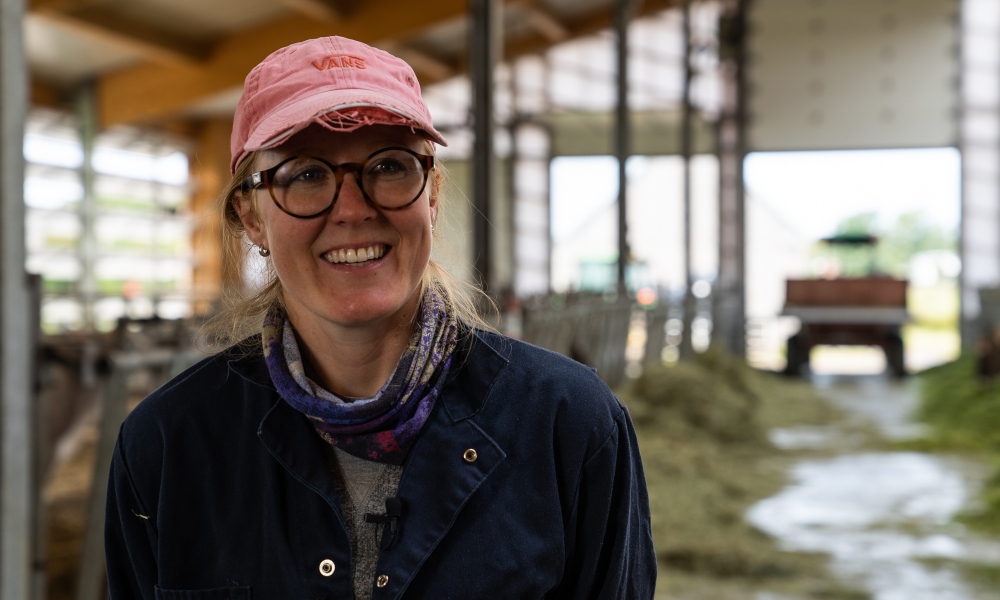
At a bend in a small country road in the Montérégie region, amid a very typical pastoral setting, the Au Gré des Champs cheese dairy stands out from the landscape with its red roof and brand‑new, modern‑designed cow barn. It’s here that the Gosselin family produces its farmstead cheeses.
Twenty years after being founded, the Au Gré des Champs cheese dairy now produces about ten cheeses with milk from its Brown Swiss cows, a breed known for its fatty milk that is rich in protein, making it “ideal for cheese production,” explain the owners. The products stand out because of the unique and distinctive characteristics of raw‑milk cheese.
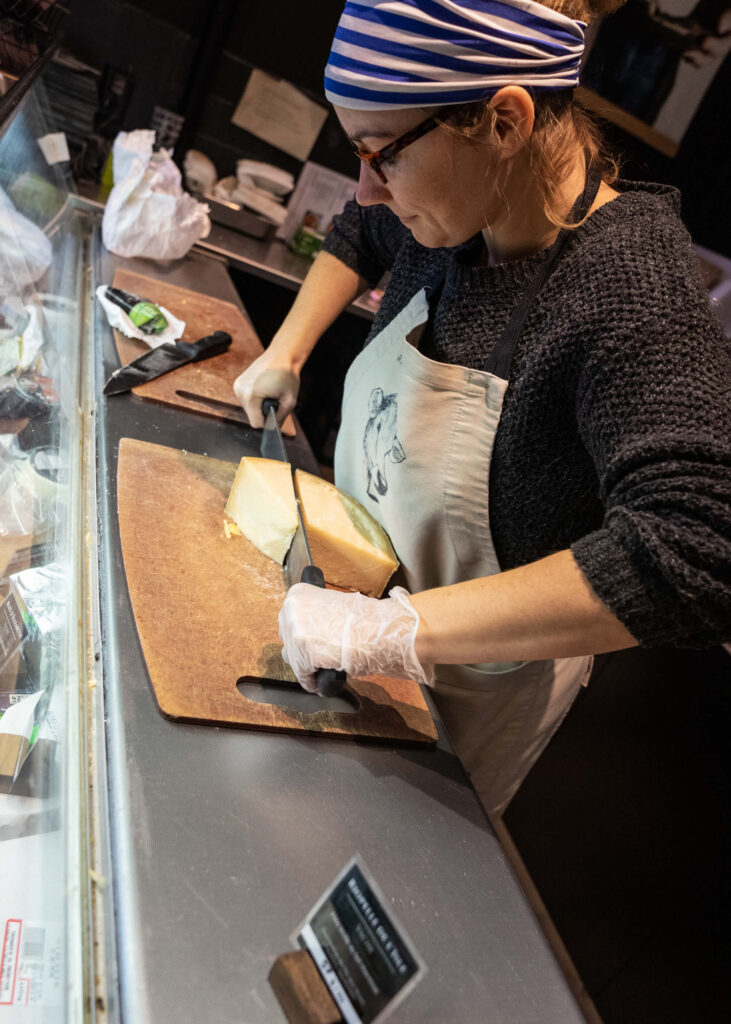
The cheese dairy was named producer of the year at the 2019 Gala des Lauriers, and many of the farmstead products from Au Gré des Champs have been recognized as being among the best cheeses from Québec, with the awards to back it up: Le Gré des Champs, with a taste that reflects what the cows graze on in the pastures; Le Pont Blanc with its flowered rind; Le Frère Chasseur, with its taste of candied fruit and caramel overtones; and Le Monnoir, which is a firm cheese that is perfect for a raclette. They are all available in the charming cheese store, which offers a range of local Québec products, or through the online store.
Let there be light
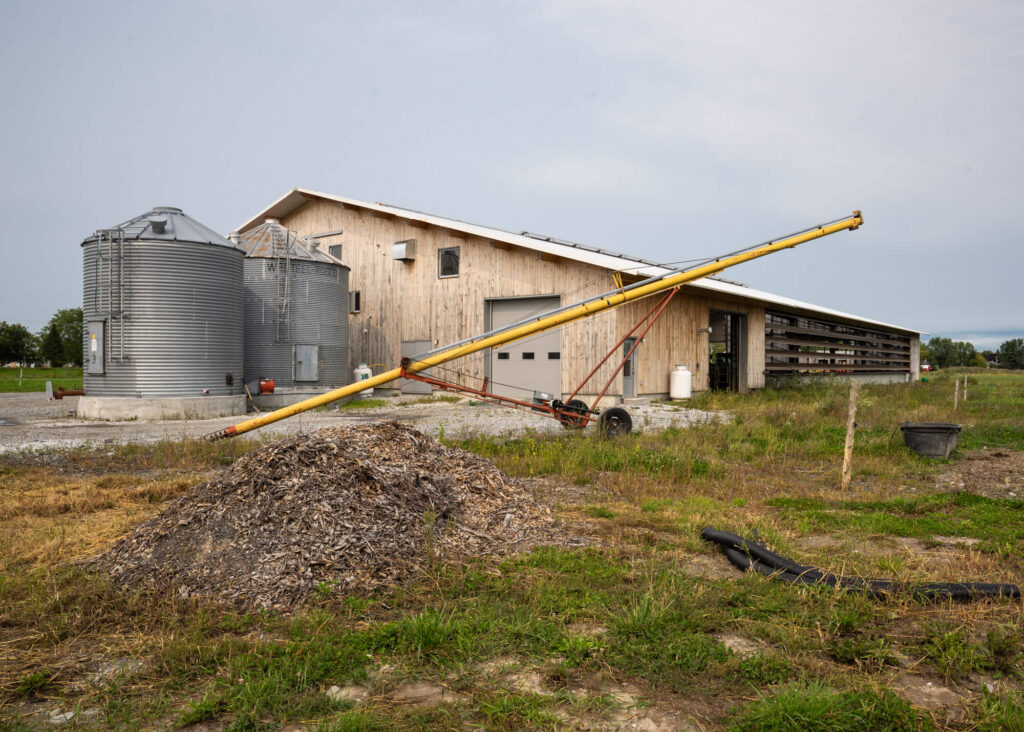
Let’s take some time to meet the cows in their magnificent new home, an immense cow barn designed with clean lines by the architects from the firm La Shed, and whose construction was completed in 2019. Visitors can enter the barn during working hours and admire the building’s luminosity and cleanliness.
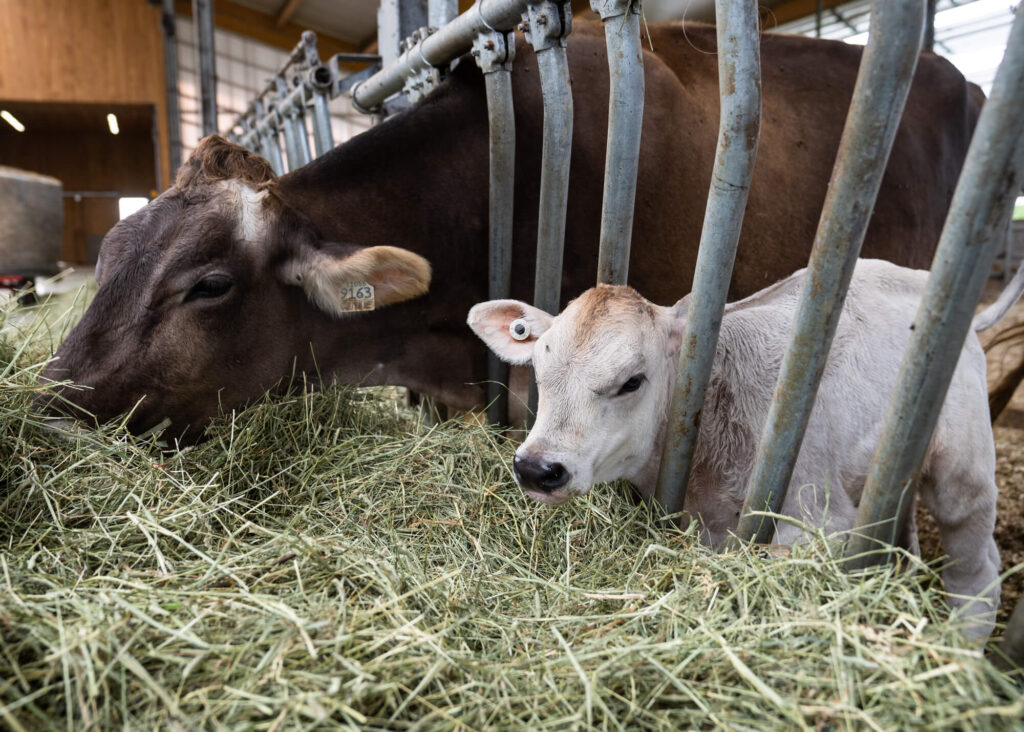
And here you will meet Nadia, Martha and Rose: at Au Gré des Champs, all the cows have a name. And these “young ladies” are treated with meticulous care. For the Gosselin family—Daniel, his wife Suzanne and their daughter Marie‑Pier—the animals’ well‑being is a priority. After all, they’re practically part of the family!
Everything is done to ensure the herd’s comfort in their new home. “It’s really in line with the values we promote as agricultural producers,” points out Marie‑Pier Gosselin, who is carrying on the family business. “We’ve done everything we can (in terms of development) for the animals’ well‑being.” True visionaries, her parents began the shift toward organic farming in the mid‑1990s, and then launched an initial raw‑milk farmstead cheese a few years later, in 2000.
Beyond aesthetic considerations, this agronomy graduate wanted to offer state‑of‑the‑art facilities to her Brown Swiss cows. The huge 17,000 sq. ft. building (the size of a Canadian Tire, no more, no less) is built with hemlock spruce from the area since local consumption is another value dear to the owners. It was designed specifically to allow the animals greater freedom of movement. Also, they are never tied up inside and go outside as much as possible, particularly in the summer, but also in the winter. “In the cow barn, they can lie down wherever they want and next to whichever other cow they want,” says Marie‑Pier Gosselin. “Nothing restrains their movement. Even the calves are raised with their nursing mothers, which allows them to truly experience the life of a calf and, among other things, to drink whenever they want to. Already, it can be seen from measuring their growth that they’re doing really well in the new cow barn.”
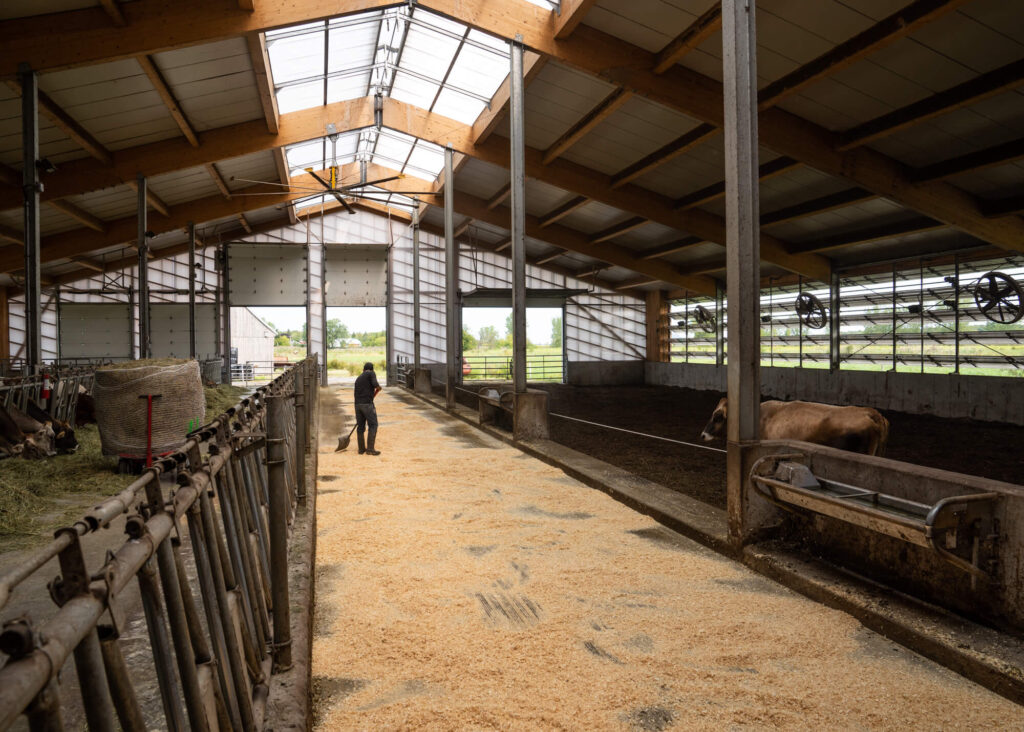
“At the beginning of our expansion project, my father and I visited many cow barns, especially to look at the technical aspects,” she says. “That allowed us to better determine what we wanted.” And it is nothing like those dark, poorly ventilated cow barns that look like “huge arenas.” Here, the cow barn, which is open to visitors, is flooded with natural light due to the translucent walls and a skylight. Pretty uncommon for a cow barn!
Another unique feature that changes everything, both for the animals and for the workers and visitors: the air circulation. “It almost doesn’t smell like a cow barn,” says Marie‑Pier Gosselin, who feels that all these factors have tangible effects on the quality of life of the entire family and the employees. Especially since, according to her, the farmers spend a considerable amount of time with the animals in the cow barn. “More than in our own home,” she says.
A family affair
By stepping in to continue the family business, Marie‑Pier Gosselin is taking up the reins from her parents. What is less known is that her parents had taken over the dairy farm of some 65 hectares built by the grandfather in 1963, and transformed it into a cheese dairy. Her sister, Virginie, has chosen a career in nutrition photography—a profession that allows her to occasionally work with the rest of the family.
Driven by the same sense of innovation as the two generations that preceded her, Marie‑Pier Gosselin is not lacking in ideas. For example, the old cow barn with the red roof will be renovated and transformed into a boutique, where customers can be greeted in a more suitable environment. “We really want to put this building to good use again, not just because it’s part of our family heritage, but also because it has a truly interesting structure,” she explains.
With fields as far as the eye can see, a few trees and, in the distance, Mont Saint‑Grégoire—all just a few minutes from downtown Saint‑Jean‑sur‑Richelieu—this is the picture‑perfect setting for a visit to the farm. Shall we make it a date?
In collaboration with Bonjour Québec and Tour du Québec.