Jonathan B. Roy is an adventurer and author who’s cycled the world, amassing nearly 40,000 km in 40 countries. His books, Histoires à dormir dehors, capture the essence of bike travel and meeting locals. Jonathan is now touring the west part of the Montérégie, and he chronicles here his tales of exploration and discovery with his usual globetrotting flair.
Jonathan B. Roy’s journey in video (only available in French)

By Jonathan B. Roy
The Montérégie and its vast bike network are treasures everyone needs to discover, especially
out west, around Salaberry-de-Valleyfield and Vaudreuil-Soulanges. I spent three days there exploring the region’s landscape and rich history.
An industrial past
In Salaberry-de-Valleyfield, I entered the MUSO museum and stepped inside the fascinating history of the Montreal Cotton Company (MOCO). This massive spinning mill ran from 1874 to World War II. It employed thousands of workers and marked the labour movement in Québec. Today, its industrial heritage lives on in Hôtel MOCO.
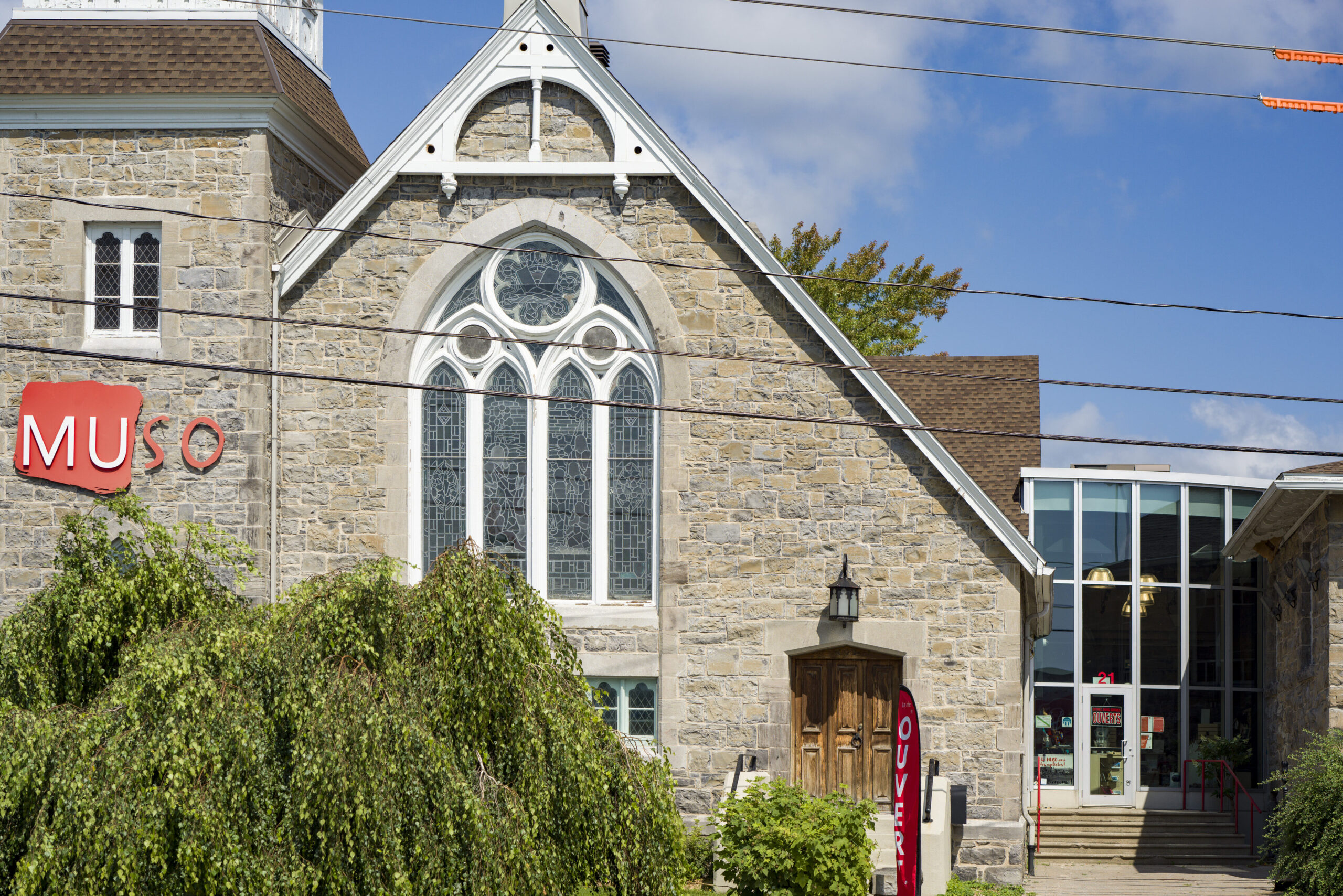
MOCO, as it was affectionately called, was the largest cotton mill in Canada from its founding in 1874 until the end of the Second World War. Employing half of the region’s workforce — some 3,600 workers — it was also the biggest industrial site in Québec. Entire families worked there, including children as young as eight, who would hide in carts when inspectors arrived. The factory, one and a half times the size of the Olympic Stadium in Montréal, was stiflingly hot and humid. Unsurprisingly, the harsh working conditions led to major strikes that had national repercussions. Women, in particular, played a leading role in this cradle of union activism in the province.
MOCO was established in Valleyfield thanks to the steady water currents of the St. Lawrence River, which have been increasingly channeled over the past two centuries. Construction of the first Beauharnois Canal began in 1842 to bypass the rapids farther north.
During my stay in Salaberry-de-Valleyfield, I chose to stay at the beautiful Hôtel MOCO. Certified Bienvenue cyclistes! by Vélo Québec, the hotel offers a few tools but, more importantly, a large storage space specially designed for bicycles, and even kayaks.
As its name suggests, this 19th-century building, made entirely of red brick, was once part of the cotton mill. Fully renovated, it still retains its original charm, particularly in its welcoming lobby adorned with photos that recall the city’s rich industrial past. In the bright, peaceful rooms, it’s hard to imagine the harsh working conditions that once existed there.
The Soulanges bike path
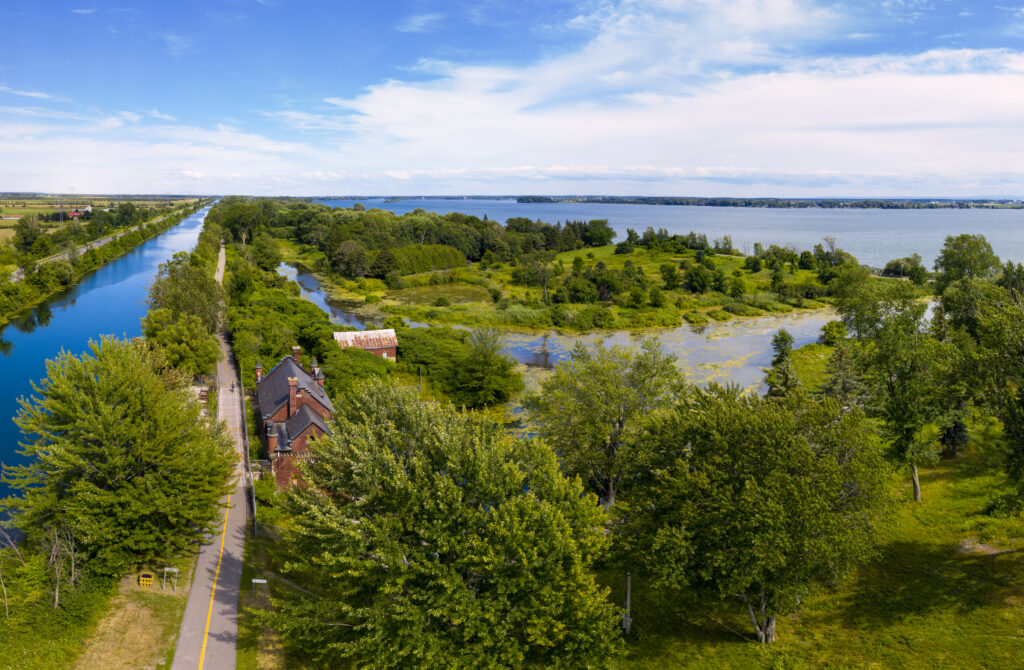
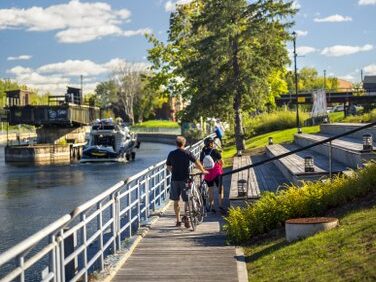
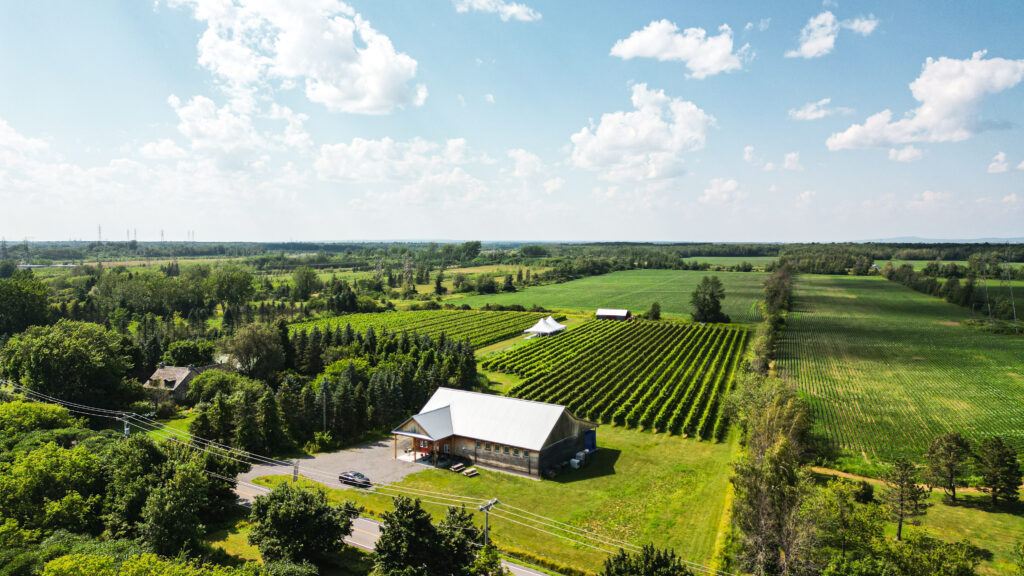
For my first day of cycling, I cross to the north shore and head toward the Soulanges Canal, which became the main maritime transport route in 1899. Today, the 35 km Soulanges bike path runs alongside it. I join the trail at Coteau-du-Lac and soon pass by the Petit pouvoir, a small red hydroelectric station that looks a bit like the Château Frontenac in Québec city. I stop for a bite in Les Cèdres and refresh myself at the Le Bourg des Cèdres vineyard.
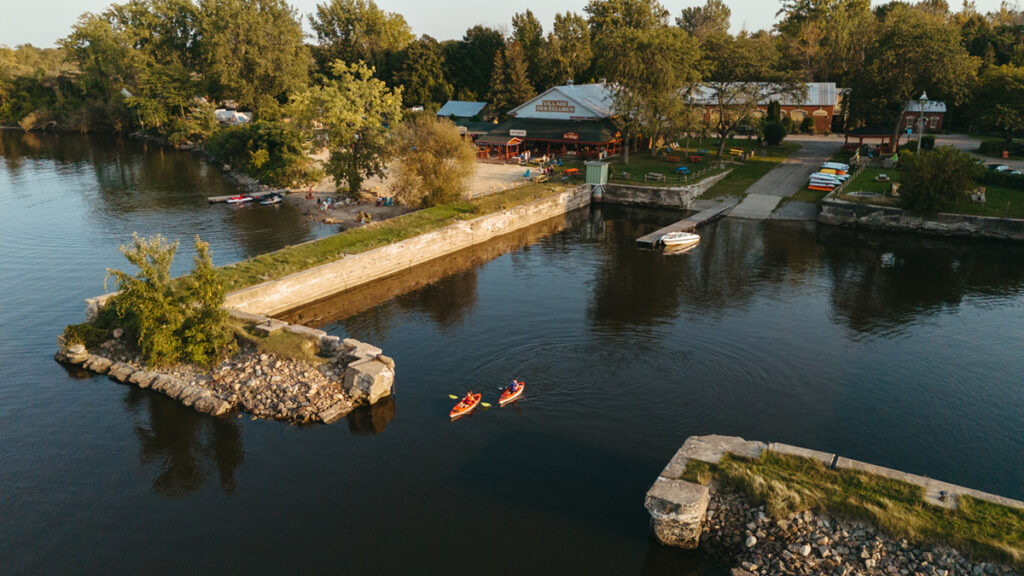
A few kilometers farther, I arrive at the Village des Écluses, a site at the mouth of Lake Saint-Louis that once hosted campers during Expo 67 and later became a popular outdoor theater. Originally, the area was used for the construction of the Soulanges Canal. Now, the historic buildings have been repurposed for recreation, with opportunities for kayaking, paddleboarding, even electric surfing, along with music, a beach, camping, and a few restaurants. It was very hard to leave and make my way back to where I started!
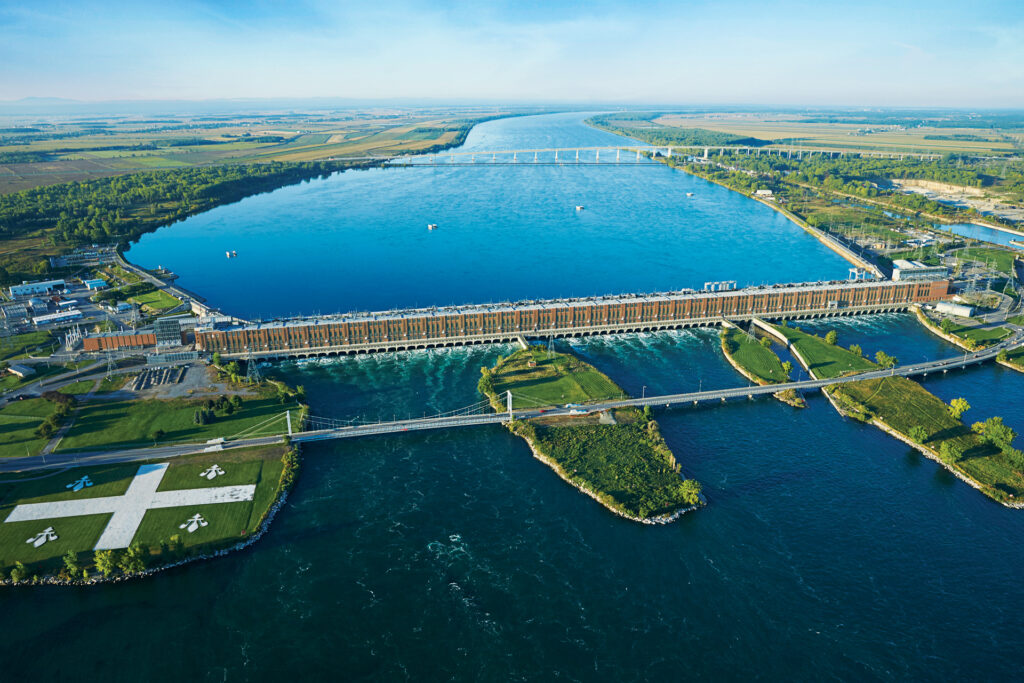
Beauharnois power plant
For my second day of exploring, I cross another bridge—this time the one spanning the (new) Beauharnois Canal. “New” is relative, of course, as this canal was artificially dug around 1930.
Blending history and culture once again with my cycling activities, I take advantage of one of the many free tours offered by Hydro-Québec across the province—this one right in the heart of the centrale de Beauharnois (power plant). With its Art Deco architecture, the fifth-largest power station in Québec, stretching an impressive 926 metres, generated its first megawatts in 1932. Two additional sections increased its capacity in 1951 and 1961.
Led by a knowledgeable guide, the free tour included a thorough and engaging explanation of hydroelectric production in the region, followed by a descent into the dam to witness a turbine in action, both captivating and incredibly loud.
Before leaving, be sure not to miss the world’s largest Québec flag, located right in front of the power station next to Route 132. Fittingly, it’s here in Québec. Laid out in grass with fleur-de-lys and white stripes in small stones, it has stretched 100 by 200 metres across the ground since 1953. It’s said to be an important landmark for pilots landing at nearby Trudeau Airport.
Beauharnois-Salaberry Regional Park
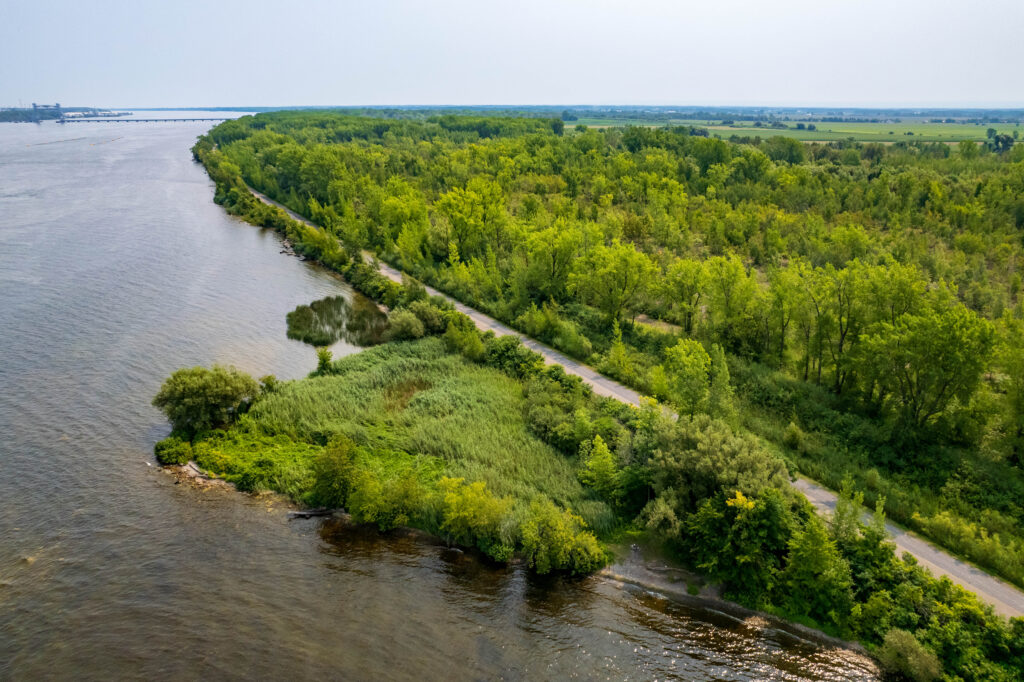
While the Beauharnois-Salaberry Regional Park offers no less than 72 kilometers of bike paths, I opt for a round-trip ride along the 26 kilometers located south of the Beauharnois Canal. Flat, paved, and peaceful, the trail runs between water and forest and features several rest stops where I enjoy historical interpretation panels about the region. There are also colorful murals, water access points, and scenic viewpoints with free binoculars overlooking the canal. With its one-kilometer width, the canal is dotted with cargo ships navigating the St. Lawrence Seaway.
Times have certainly changed since the days when portage was necessary at the rapids and working conditions sparked riots. Over the past two centuries, some farmland has turned into towns, others have been carved up by increasingly large canals. Some industries have given way to others, ones focused more on recreation, exploration, and a deeper respect for natural resources.
No surprise, the best way to take all in this history, culture, and the warmth of the region’s people is by bike.